
Azure cost optimization strategies 2026
As we head through 2026, the Azure cost landscape has shifted from simple “right-sizing” to a sophisticated AI-driven FinOps model. With the late-2025 removal of Enterprise Agreement (EA) volume discounts, many organizations are seeing a 6–12% baseline cost uplift, making automated commitment management via Azure Savings Plans non-negotiable.
The biggest 2026 trend is FinOps for AI: specifically managing high-density GPU spend (ND-series) and the consumption-based “bill shock” from Azure OpenAI and Microsoft Fabric. Architects must also fast-track the Azure Disk Encryption (ADE) retirement migration to Encryption at Host to avoid operational overhead. Additionally, Azure Carbon Optimization is now GA, allowing teams to finally correlate carbon emission reduction with financial savings. Whether you’re leveraging Azure Boost for hardware-accelerated efficiency or managing AKS Fleets, the goal in 2026 is “Technology Value”—ensuring every AI-driven dollar aligns with measurable business outcomes.
In the current hyper-scale era, the primary challenge facing senior cloud architects and financial operations teams is no longer just the velocity of deployment, but the sustainability of the cloud spend. Many organizations face significant “bill shock” as their cloud-native footprint expands without a rigorous governance framework. The complexity of modern distributed systems often leads to orphaned resources, over-provisioned compute clusters, and misunderstood data transfer costs. Implementing effective Azure cost optimization strategies is not merely a task for the finance department; it is a fundamental engineering discipline that ensures technical agility does not lead to financial instability. For a senior architect, the goal is to create an environment where every dollar spent directly correlates to business value, leveraging advanced telemetry and automated governance to eliminate cloud waste at the source.
Deep Technical Explanation: The Architecture of Cloud Economics
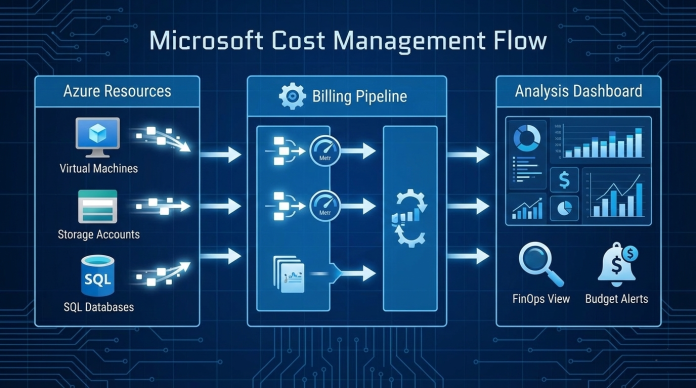
To master Azure cost optimization strategies, one must first understand the underlying architecture of Microsoft Cost Management and the telemetry pipeline that informs billing. Azure operates on a sophisticated metering system where resources emit usage data to the billing platform via the Microsoft Customer Agreement or Enterprise Agreement frameworks. This data is not just a static record but a dynamic stream that can be queried using the Azure Resource Graph and the Cost Management API. An end-to-end cloud-native flow for cost governance begins with the ingestion of these usage signals, which are then categorized by tags, resource groups, and management groups to provide a granular view of the consumption landscape.
The internal working of cloud pricing involves a trade-off between flexibility and commitment. For instance, the Azure Savings Plan for Compute and Azure Reservations operate by providing a discount in exchange for a commitment to a consistent amount of usage. From a technical perspective, these are not just financial instruments but capacity planning tools. When you purchase a reservation, the Azure billing engine applies the discount to matching resources across the specified scope, prioritizing instances with the highest cost. This logic happens at the billing tier, meaning the actual VM performance is unaffected, but the unit cost is drastically reduced.
Comparison of Azure Commitment Models
| Model | Ideal Workload Type | Savings Potential | Flexibility Level |
| Pay-As-You-Go | Spiky, unpredictable, short-term | 0% (Base Rate) | Highest – No commitment |
| Azure Reservations | Steady-state, specific VM sizes | Up to 72% | Medium – Locked to Region/Family |
| Azure Savings Plan | Dynamic, multi-service (VM, App Service) | Up to 65% | High – Flexible across Compute |
| Azure Spot Instances | Batch processing, stateless, interruptible | Up to 90% | Lowest – Can be evicted |
Real-World Use Cases: Multi-Cloud Engineering and Scalability
In a multi-cloud enterprise environment involving AWS, Azure, and GCP, the strategies for reducing spend must be unified under a FinOps framework. For example, a common real-world scenario involves an organization running a global e-commerce platform. In AWS, they might utilize Savings Plans for their EC2 fleet, while in Azure, they leverage the Azure Hybrid Benefit for Windows Server to significantly lower the cost of their legacy SQL Server workloads. By repurposing on-premises licenses for the cloud, the organization avoids the “double-pay” trap, which is one of the most effective Azure cost optimization strategies for hybrid cloud migrations.

Another critical use case is the management of Azure Kubernetes Service (AKS) costs. Containerized environments often suffer from “resource request” bloat, where developers request more CPU and memory than the container actually consumes. By implementing the Vertical Pod Autoscaler (VPA) and utilizing Azure Spot VMs for secondary node pools, architects can drive down the cost of dev/test clusters by nearly 90%. Furthermore, analyzing Azure network bandwidth cost reduction opportunities—such as moving traffic from public IPs to Azure Private Link—not only enhances security but also eliminates the expensive data egress charges associated with public internet routing.
Comparison of Compute and Storage Optimization Tools
| Optimization Category | Azure Tooling | Functionality | Strategy Impact |
| Compute Sizing | Azure Advisor | Identifies low-utilization VMs | Right-sizing and shutdown |
| Storage Lifecycle | Storage Lifecycle Management | Moves data from Hot to Cool/Archive | Reduces per-GB monthly spend |
| Database Cost | SQL Elastic Pools | Shares resources across multiple DBs | Handles spiky multi-tenant loads |
| Automation | Azure Logic Apps | Schedules start/stop for non-prod | Eliminates weekend/night waste |
Security, Compliance, and Risk Management in FinOps
A common oversight in Azure cost optimization strategies is the intersection of security and spend. Unrestricted Identity and Access Management (IAM) roles can allow developers to spin up high-end GPU instances (like the ND-series) without approval, leading to thousands of dollars in unintended charges within days. Implementing Azure Policy to restrict allowed VM SKUs and mandatory tagging is both a security requirement and a cost control measure. Compliance frameworks like SOC2 and HIPAA also demand that data be retained for long periods; however, storing this data in “Hot” storage is a financial risk. Utilizing Azure Storage Archive Tier with immutable policies satisfies both the legal compliance and the need for cost reduction.
Logging and monitoring also present a significant cost factor. While Azure Monitor and Log Analytics are essential for observability, excessive ingestion of verbose logs can become a major expense. Senior architects should implement data transformation rules (DTRs) to filter out telemetry noise before it reaches the workspace. This ensures that only high-value security events and performance metrics are stored, effectively lowering the monthly Microsoft Cost Management bill without compromising the organization’s security posture or visibility.
Best Practices & Production Recommendations for 2026
To achieve elite-level cloud governance, organizations must move beyond manual reviews and embrace cloud cost governance as part of their CI/CD pipeline. One of the most common mistakes is ignoring orphaned disks and unattached managed disks. When a VM is deleted, its disk often remains, continuing to incur costs. Automated scripts should be deployed to identify and snapshot-then-delete these zombie assets. Additionally, utilizing burstable VM series (B-series) for low-traffic web servers or small databases can provide significant savings compared to fixed-performance instances.
Enterprise-Ready Cost Reduction Checklist
| Action Item | Technical Implementation | Expected Benefit |
| Idle Resource Discovery | Query Azure Resource Graph for 0% CPU VMs | Stop/Deallocate wasted compute |
| Zombie Disk Cleanup | Identify Managed Disks with ‘Unattached’ state | Significant storage savings |
| Public IP Audit | Remove unused Dynamic/Static Public IPs | Reduce static networking fees |
| Tiering Azure SQL | Move low-use DBs to Serverless tier | Pay-per-second compute billing |
Another high-impact recommendation is the aggressive use of Azure Advisor cost recommendations. This service uses machine learning to analyze historical usage and suggests specifically where right-sizing virtual machines azure can occur without impacting performance. For dev/test environments, the use of Azure Dev/Test pricing provides significant discounts on licensing for non-production workloads, which is often overlooked by enterprises moving from a traditional data center mindset to the cloud.
Conclusion: Sustaining the Cloud Lifecycle
Mastering Azure cost optimization strategies is a continuous journey that requires a cultural shift toward transparency and accountability. By integrating the FinOps framework into the daily workflow of engineers, organizations can ensure that their infrastructure remains lean and performant. Whether it is through the strategic use of Azure Reservations, the technical precision of right-sizing, or the rigorous elimination of cloud waste in azure, the objective remains the same: maximizing the return on every cloud investment. As we move further into 2026, the ability to automate these processes will distinguish the industry leaders from those struggling with escalating cloud debt.