

Kubernetes Container Orchestration
Container orchestration is one of the most transformative advancements in modern software development, enabling developers to manage, deploy, and scale containerized applications efficiently. Kubernetes, the leading container orchestration platform, has revolutionized how software is built and deployed, turning complex containerized environments into manageable ecosystems. In this article, we’ll explore the evolution of containerization, the necessity of orchestration, and how Kubernetes has become the industry standard.
1. What is Containerization?
Containerization is a lightweight virtualization technology that packages an application and its dependencies into a single unit, called a container. This approach ensures that the application runs seamlessly across different environments, whether it’s a developer’s laptop, an on-premise data center, or the cloud.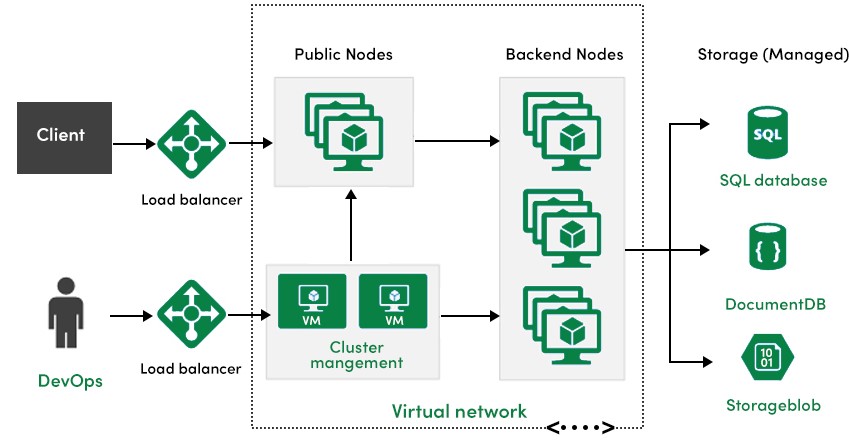
Key Benefits of Containerization
- Portability: Containers can run consistently across diverse environments.
- Efficiency: Containers share the host OS kernel, making them faster and less resource-intensive than traditional virtual machines.
- Scalability: Containers can be quickly replicated to meet demand.
Containerization has transformed how software is developed, making it easier to build, test, and deploy applications at scale.
2. Why Do We Need Container Orchestration?
As container adoption grows, so does the complexity of managing them. While a single container is simple to manage, applications often consist of multiple containers, each performing a specific function. This complexity creates challenges, such as:
Challenges in Managing Containers
- Scaling: How do you scale containers up or down based on demand?
- Networking: How do containers communicate securely and efficiently?
- Load Balancing: How do you distribute traffic across containers evenly?
- Monitoring: How do you track the health and performance of containers?
- Updates: How do you update containers without disrupting the application?
Container orchestration addresses these challenges by automating deployment, scaling, networking, and other operational tasks, ensuring that the system is reliable, scalable, and maintainable.
3. Introduction to Kubernetes
Kubernetes, often abbreviated as K8s, is an open-source platform that automates container orchestration. Initially developed by Google, Kubernetes is now maintained by the Cloud Native Computing Foundation (CNCF). It has emerged as the de facto standard for managing containerized applications.
Why Kubernetes?
Kubernetes simplifies the management of containerized environments by providing tools to:
- Automate container deployment and scaling.
- Monitor the health of containers and replace unhealthy ones.
- Manage networking between containers.
- Enable rolling updates and rollbacks.
4. Key Features of Kubernetes
Kubernetes offers a wide range of features that make it a powerful orchestration tool:
a. Automated Deployment and Scaling
Kubernetes automates the deployment and scaling of applications based on resource usage.
b. Self-Healing
Kubernetes monitors container health and automatically restarts or replaces failed containers.
c. Service Discovery and Load Balancing
Kubernetes ensures seamless communication between containers through DNS names or IP addresses, with built-in load balancing.
d. Rolling Updates and Rollbacks
Kubernetes allows you to update applications without downtime and roll back if something goes wrong.
e. Resource Management
Efficiently allocates resources to containers, ensuring optimal performance and cost savings.
5. Kubernetes Architecture
Kubernetes follows a client-server architecture, comprising the following components:
a. Master Node
The master node manages the cluster, making global decisions about resource allocation and scheduling.
- API Server: Acts as the gateway for all interactions with the Kubernetes cluster.
- Controller Manager: Ensures that the desired state of the cluster matches the actual state.
- Scheduler: Assigns containers to nodes based on resource availability.
- etcd: A key-value store that holds cluster configuration data.
b. Worker Nodes
Worker nodes run the application containers.
- Kubelet: Ensures that containers are running as expected on the node.
- Kube-Proxy: Manages network rules and ensures communication between containers.
- Container Runtime: Runs and manages containers (e.g., Docker, CRI-O).
6. Benefits of Kubernetes
Kubernetes provides numerous advantages for organizations deploying containerized applications:
a. Scalability
Kubernetes can scale applications horizontally (by adding containers) or vertically (by increasing resource allocation).
b. Portability
Applications running on Kubernetes can be easily moved across on-premises and cloud environments.
c. Cost Efficiency
By optimizing resource usage, Kubernetes reduces infrastructure costs.
d. Resilience
Kubernetes ensures high availability by automatically recovering from failures.
e. Ecosystem
With a vibrant community and integration with tools like Prometheus, Istio, and Helm, Kubernetes offers a robust ecosystem.
7. Limitations of Kubernetes
Despite its benefits, Kubernetes has some drawbacks:
a. Complexity
Setting up and managing Kubernetes requires significant expertise.
b. Resource Intensity
Kubernetes demands substantial computational resources, making it less suitable for small-scale deployments.
c. Steep Learning Curve
Kubernetes has a complex architecture that can be daunting for beginners.
8. Kubernetes vs Docker Swarm
| Feature | Kubernetes | Docker Swarm |
|---|---|---|
| Setup | Complex | Simple |
| Scalability | Scales efficiently for large clusters | Better for smaller clusters |
| Self-Healing | Yes | Limited |
| Rolling Updates | Advanced | Basic |
| Community Support | Large and active | Relatively smaller |
9. Use Cases of Kubernetes Container Orchestration
a. Microservices Architecture
Kubernetes simplifies the management of microservices, enabling efficient scaling and communication.
b. Continuous Integration/Continuous Deployment (CI/CD)
Kubernetes integrates seamlessly with CI/CD pipelines for automated deployment.
c. Hybrid and Multi-Cloud Environments
Kubernetes enables consistent application deployment across different environments.
d. Big Data and Machine Learning
Kubernetes orchestrates distributed computing frameworks like Apache Spark.
10. The Future of Container Orchestration
With the rapid adoption of Kubernetes, the future of container orchestration looks promising. Emerging trends include:
- Serverless Kubernetes: Combining Kubernetes with serverless frameworks for greater efficiency.
- AI-Driven Orchestration: Using AI to optimize cluster performance and resource allocation.
- Enhanced Security: Strengthening container security through advanced tools and policies.
Conclusion
Kubernetes has redefined how modern applications are deployed and managed, offering unparalleled automation, scalability, and reliability. While it comes with a steep learning curve and resource demands, the benefits it provides far outweigh the challenges. As organizations continue to embrace containerization, Kubernetes will remain at the forefront of container orchestration, driving innovation in software development and deployment.
Further Resources
By understanding Kubernetes and container orchestration, you can unlock the full potential of modern software development and drive innovation in your organization.