
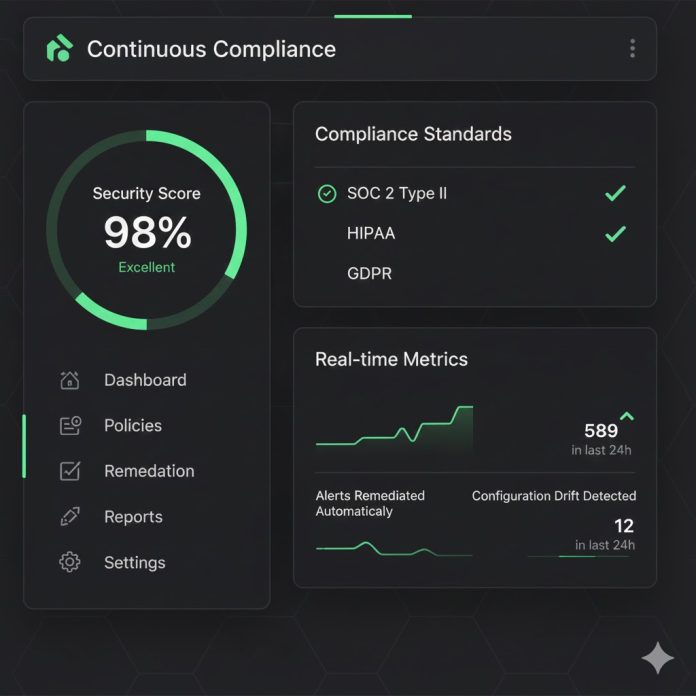
Cloud Compliance Monitoring Tools
In the modern enterprise landscape, the perimeter has dissolved, replaced by a complex mesh of ephemeral workloads and distributed identities. As organizations in the US and UK accelerate their migration to hyper-scale environments, the primary business pain point has shifted from simple resource provisioning to the high-stakes world of regulatory exposure and configuration drift. A single misconfigured S3 bucket or an over-privileged service account in a Kubernetes cluster can lead to catastrophic data breaches, making cloud compliance monitoring tools the bedrock of any production-ready security posture. The challenge is no longer just about meeting a static audit once a year; it is about maintaining a state of continuous assurance where every API call is measured against organizational and global standards.
For a senior cloud architect, the goal is to implement a framework that treats compliance as code. This paradigm shift ensures that security guardrails are baked into the CI/CD pipeline, preventing non-compliant resources from ever reaching production. By leveraging automated discovery and real-time remediation, enterprises can navigate the complexities of HIPAA, SOC2, and GDPR without sacrificing the agility that cloud-native architectures provide. In this technical deep dive, we will explore the internal mechanics of these tools and how they integrate with the major providers—AWS, Azure, and GCP—to deliver a unified security visibility layer.
The Architecture of Continuous Compliance Monitoring
The internal working of a modern compliance engine relies on a multi-tier architectural flow that begins at the control plane. Unlike legacy systems that performed periodic scans, today’s cloud-native monitoring solutions utilize event-driven hooks. When a resource is created or modified, the cloud provider’s audit service—such as AWS CloudTrail or GCP Cloud Audit Logs—emits a near real-time notification to the monitoring platform.
The end-to-end flow involves four critical stages: Data Ingestion, Policy Mapping, Risk Scoring, and Automated Remediation. During ingestion, the tool gathers metadata from various services, including IAM roles, network configurations, and storage encryption status. This raw data is then mapped against a library of predefined controls, such as the CIS Benchmarks or NIST 800-53. The engine calculates a real-time risk score, allowing security teams to prioritize high-severity violations.
Standard Compliance Monitoring Workflow
| Phase | Technical Action | Primary Cloud Services Involved |
| Ingestion | Metadata extraction via APIs | CloudWatch, Azure Monitor, GCP Recommender |
| Validation | Policy evaluation against OPA | Open Policy Agent, AWS Config, Azure Policy |
| Alerting | Pub/Sub notifications to SOC | Amazon SNS, Azure Event Grid, GCP Pub/Sub |
| Remediation | Automated Lambda/Function fix | AWS Lambda, Azure Functions, Cloud Run |
Real-World Enterprise Use Cases Across the Big Three
In a production environment, the application of cloud compliance monitoring tools varies significantly depending on the provider’s native ecosystem and the organization’s specific regulatory requirements.
AWS: The Audit Manager and Security Hub Synergy
Large-scale AWS environments often face “tagging fatigue” and sprawl. A global financial firm might use AWS Audit Manager to automate the evidence collection for PCI DSS. By integrating this with AWS Security Hub, the firm gains a single pane of glass for all security findings. If a developer accidentally opens a port on a Security Group that violates the baseline, the Security Hub detects it within seconds, triggering a Step Function to revoke the change and notify the owner.
Azure: Management Groups and Policy Blueprints
For enterprises heavily invested in the Microsoft ecosystem, Azure Policy provides a hierarchical enforcement mechanism. Using Azure Blueprints, architects can define a “standardized environment” that includes specific network configurations and IAM roles. A healthcare provider in the UK can use these tools to enforce data residency, ensuring that all SQL databases are restricted to the ‘UK South’ region to comply with local data protection laws.
GCP: Hierarchical Governance and Asset Inventory
Google Cloud Platform offers a unique advantage with its Cloud Asset Inventory. This service provides a five-week history of resource snapshots, which is invaluable during a forensic audit. An e-commerce company utilizing GCP can implement Organization Policy constraints to disable the creation of external IP addresses on compute instances by default, significantly reducing the external attack surface.
Enterprise Compliance Metrics Comparison
| Metric | AWS Security Hub | Microsoft Defender for Cloud | GCP Security Command Center |
| Native Frameworks | CIS, PCI-DSS, NIST | ISO 27001, SOC, HIPAA | CIS, PCI, OWASP |
| Detection Speed | Near Real-time | Near Real-time | Real-time (via Event Threat Detection) |
| Multi-Cloud Support | Limited (via Connectors) | Extensive (Multi-cloud native) | Strong (BigQuery integration) |
| Automation Level | High (via EventBridge) | High (via Logic Apps) | Medium-High (via Cloud Functions) |
Tools and Platform Comparison: Finding the Right Fit
When deciding between native cloud provider tools and third-party SaaS platforms like Wiz, Orca, or Lacework, the decision often hinges on the complexity of the multi-cloud footprint. Native tools offer the deepest integration and lowest latency but can lead to fragmented visibility if the enterprise operates across multiple vendors.
Third-party cloud compliance monitoring tools typically utilize an agentless approach, scanning the cloud control plane and disk snapshots to identify vulnerabilities without requiring software installation on virtual machines. This is particularly useful for rapid onboarding in large organizations where deploying agents to thousands of legacy instances is unfeasible.
[Image showing a comparison dashboard between native cloud security tools and an agentless third-party security platform]
Feature Benchmarking for Compliance Platforms
| Tool Category | Native (Cloud-Specific) | Agentless SaaS (e.g., Wiz) | Agent-Based (e.g., Trend Micro) |
| Ease of Setup | Instant (Service Enablement) | Rapid (API/IAM Role) | Slow (Deployment Scripts) |
| Depth of Vision | Deep Control Plane | Deep Disk & OS Analysis | Deep Runtime Monitoring |
| Cost Model | Pay-as-you-go | Annual Subscription | Per Instance/Per Agent |
| Best For | Single-cloud startups | Multi-cloud enterprises | High-security runtime needs |
Security, Compliance, and Risk Management Frameworks
The core of any monitoring strategy must address the triad of Identity and Access Management (IAM), Data Encryption, and Logging. In a zero-trust model, identity is the new perimeter. Cloud compliance monitoring tools must continuously audit IAM policies to identify “zombie” accounts or roles with excessive permissions (over-provisioning).
From a compliance perspective, the following standards are non-negotiable for modern enterprises:
-
SOC2 Type II: Requires ongoing proof of operational effectiveness over time.
-
ISO 27001: Focuses on the Information Security Management System (ISMS).
-
HIPAA: Specific to PHI (Protected Health Information) encryption and access.
-
PCI DSS: Governs credit card data handling and network segmentation.
Encryption monitoring ensures that all data-at-rest uses AES-256 at a minimum and that Customer Managed Keys (CMK) in KMS or Key Vault are rotated regularly. Logging and monitoring must be centralized; without an immutable audit trail, a compliance tool is merely a notification engine rather than a system of record.
Risk Mitigation Strategy Table
| Risk Factor | Compliance Requirement | Monitoring Control |
| Identity Theft | MFA Enforcement | Scan for users without MFA enabled |
| Data Exfiltration | Egress Filtering | Monitor VPC Flow Logs for anomalous traffic |
| Unencrypted Data | Data at Rest Security | Audit S3/Blob/Cloud Storage bucket policies |
| Audit Failure | Immutable Logs | Enforce Log File Validation and Object Lock |
Best Practices and Production Recommendations
To achieve “Enterprise-Ready” status, architects must move beyond simple alerting. The most common mistake is creating “alert fatigue” by surfacing thousands of low-priority issues to the security team. Instead, focus on high-impact guardrails.
-
Implement Policy-as-Code (PaC): Use tools like Terraform or Pulumi to define your infrastructure. Use static analysis tools (like Checkov or Terrascan) to audit these templates before they are deployed.
-
Automate the “Low-Hanging Fruit”: Common misconfigurations—like public buckets or unencrypted disks—should be auto-remediated immediately.
-
Utilize Tagging for Context: Compliance tools are more effective when they know which application or business unit owns a resource. Enforce a tagging policy at the Organization level.
-
Adopt a Multi-Layered Approach: Use native cloud tools for real-time control-plane monitoring and a third-party CSPM (Cloud Security Posture Management) tool for multi-cloud visibility and cross-account risk correlation.
Avoid the trap of “checkbox compliance.” Just because a tool says you are 100% compliant with a framework does not mean you are secure. Compliance is the floor, not the ceiling. Continuous monitoring should be used to drive a culture of security where developers take ownership of the resources they create.
Summary of Modern Compliance Strategies
The transition to automated cloud compliance monitoring tools is no longer optional for organizations looking to scale safely in 2025. By integrating deep technical checks into the fabric of the cloud architecture, enterprises can ensure that they remain resilient against evolving threats while satisfying the stringent requirements of global regulators. From the initial ingestion of audit logs to the automated execution of remediation scripts, every step must be designed for scale, transparency, and speed.
As we look toward the future, the integration of AI and machine learning into these monitoring platforms will further reduce noise, allowing security engineers to focus on the complex, multi-stage attacks that traditional signature-based tools might miss. The goal remains clear: transform compliance from a reactive burden into a proactive competitive advantage.
External Authority Links
-
NIST Cloud Computing Standards: https://www.nist.gov/programs-projects/cloud-computing
-
AWS Compliance Documentation: https://aws.amazon.com/compliance/
-
Microsoft Azure Trust Center: https://www.microsoft.com/en-us/trust-center/product-overview
-
Google Cloud Compliance Center: https://cloud.google.com/compliance