
Explain Kubernetes Architecture
Introduction
Kubernetes is an open-source container orchestration platform designed to manage containerized applications in a distributed environment. Its architecture follows a client-server model, making it scalable, reliable, and highly efficient for modern cloud-native applications. Understanding the architecture of Kubernetes is critical to deploying, managing, and scaling containerized workloads.
This article provides a detailed overview of the Kubernetes architecture, including its components, functions, and how they work together.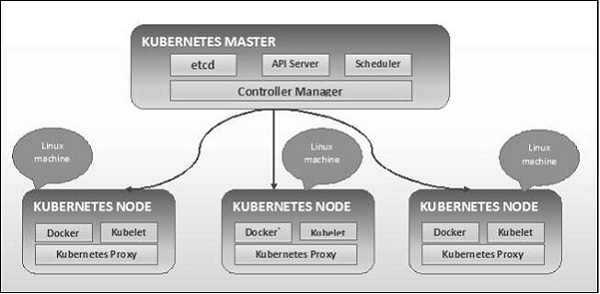
kubernetes architecture diagram
Explain Kubernetes Architecture
A kubernetes cluster architecture consists of two main components:
- Control Plane (Master Node): Manages the overall state of the cluster and provides an interface for administrators to manage Kubernetes resources.
- Worker Nodes: Host the workloads (containers) and ensure their desired state is maintained as defined by the control plane.
Below is a high-level diagram of the Kubernetes architecture:
[Master Node]
| API Server | Controller Manager | Scheduler | etcd |
      |
[Worker Nodes]
| Kubelet | Kube Proxy | Container Runtime |
kubernetes architecture components
The master node is responsible for managing the Kubernetes cluster. It ensures the desired state of the cluster is maintained by managing the worker nodes and resources. Below are the critical components of the master node:
1. etcd
- Description:
etcd is a distributed, highly available key-value store used as Kubernetes’ primary database. It stores all cluster data, including configuration, state, and metadata. - Functions:
- Stores critical cluster state information.
- Ensures consistency across the cluster.
- Handles leader election and service discovery.
- Features:
- High availability with distributed architecture.
- Accessible only via Kubernetes API Server to secure sensitive data.
2. API Server
- Description:
The API Server acts as the entry point to the Kubernetes control plane. It provides RESTful APIs for interacting with the cluster. - Functions:
- Exposes Kubernetes APIs for managing resources.
- Handles communication between the control plane and clients (e.g., kubectl, external tools).
- Authenticates, validates, and processes API requests.
- Features:
- Ensures all cluster components communicate through a single, consistent API.
- Implements an interface for third-party tools and libraries.
3. Controller Manager
- Description:
The Controller Manager is responsible for running various controllers that regulate the state of the cluster and ensure the desired state is achieved. - Key Controllers:
- Replication Controller: Ensures the specified number of pod replicas are running.
- Endpoint Controller: Updates endpoint objects when services or pods are added/deleted.
- Namespace Controller: Manages namespaces for resource isolation.
- Service Account Controller: Handles service account tokens for pods.
- Functions:
- Monitors the cluster state and makes necessary changes.
- Manages node health, replication, and resource allocation.
4. Scheduler
- Description:
The Scheduler is responsible for assigning workloads (pods) to available nodes based on resource availability and constraints. - Functions:
- Tracks resource utilization across the cluster.
- Allocates pods to nodes based on requirements (e.g., CPU, memory).
- Implements scheduling policies such as affinity, anti-affinity, and taints.
Key Components of Kubernetes Worker Node
Worker nodes are responsible for running containerized applications. Each node has the following key components:
1. Docker (or Other Container Runtime)
- Description:
A container runtime (e.g., Docker, containerd, CRI-O) is required to run and manage containers. - Functions:
- Executes containers on the node.
- Ensures resource isolation for containers.
2. Kubelet
- Description:
Kubelet is an agent that runs on each worker node. It ensures that containers are running and communicates with the control plane to maintain the node’s desired state. - Functions:
- Receives and executes commands from the API Server.
- Monitors container health and manages lifecycle events.
- Reads configuration data from etcd.
3. Kubernetes Proxy (Kube Proxy)
- Description:
Kube Proxy manages network communication for the nodes. It handles service discovery and routing requests to the appropriate pod. - Functions:
- Ensures connectivity between pods and external clients.
- Manages network rules, port forwarding, and IP tables.
- Provides primitive load balancing for services.
Master and Node Interaction
The master node communicates with worker nodes to ensure the desired cluster state. This interaction involves:
- API Server: Sending instructions and receiving status updates.
- Kubelet: Reporting node status and executing tasks as per the API Server’s instructions.
- etcd: Storing and retrieving cluster configuration data.
Features of Kubernetes Architecture
- Scalability:
Kubernetes can scale horizontally to handle thousands of nodes and applications. - Fault Tolerance:
Redundancy in etcd, API Server, and controllers ensures the cluster remains operational during failures. - Extensibility:
Kubernetes supports custom controllers, CRDs (Custom Resource Definitions), and third-party integrations. - High Availability:
Master components can run in a highly available configuration to prevent downtime. - Declarative Model:
Kubernetes uses a declarative approach, where you define the desired state, and Kubernetes ensures it is maintained.
kubernetes architecture best practices
- Set Up High Availability:
- Use multiple master nodes to avoid single points of failure.
- Use Namespaces for Isolation:
- Group and isolate resources using namespaces for better management.
- Monitor Resource Usage:
- Implement monitoring tools like Prometheus or Grafana to track cluster health and performance.
- Secure Cluster Communication:
- Enable encryption for API Server communication.
- Restrict etcd access to authorized components.
- Implement Network Policies:
- Use Kubernetes Network Policies to secure inter-pod communication.
Limitations of Kubernetes Architecture
- Complexity:
- Managing and deploying Kubernetes requires expertise and operational overhead.
- Resource Overheads:
- Running Kubernetes control plane components and worker nodes consumes significant resources.
- Networking Challenges:
- Configuring and managing Kubernetes networking can be complicated in large clusters.
- Persistent Storage:
- Kubernetes’ native support for persistent storage is limited, requiring external storage solutions.
Conclusion
Kubernetes’ architecture, with its modular and scalable design, is a robust solution for managing containerized workloads. By understanding the master and node components, their interactions, and best practices, you can effectively deploy and manage Kubernetes clusters for your applications. While it comes with complexity, the flexibility and power of Kubernetes make it the de facto standard for container orchestration.
For more details, visit the official Kubernetes documentation, Kubernetes Cluster With Minikube