
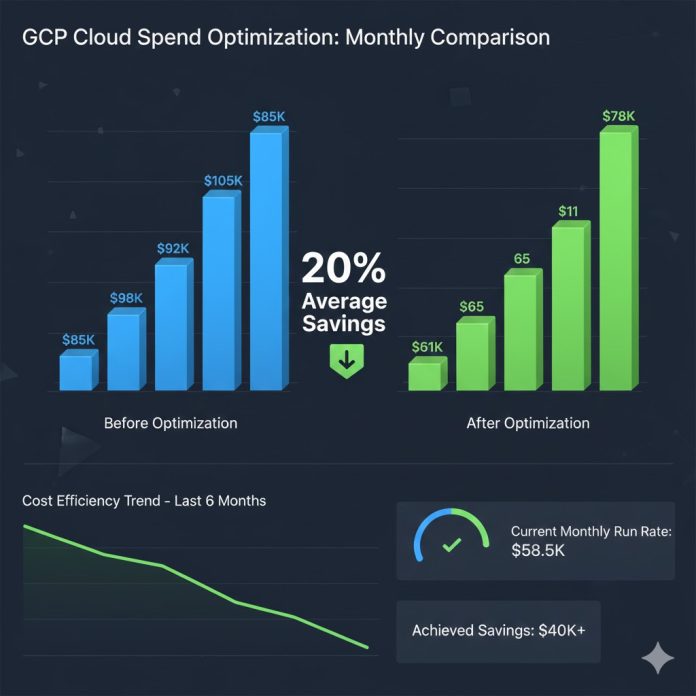
GCP Cost Optimization Techniques
A Senior Architect’s Guide to Enterprise FinOps
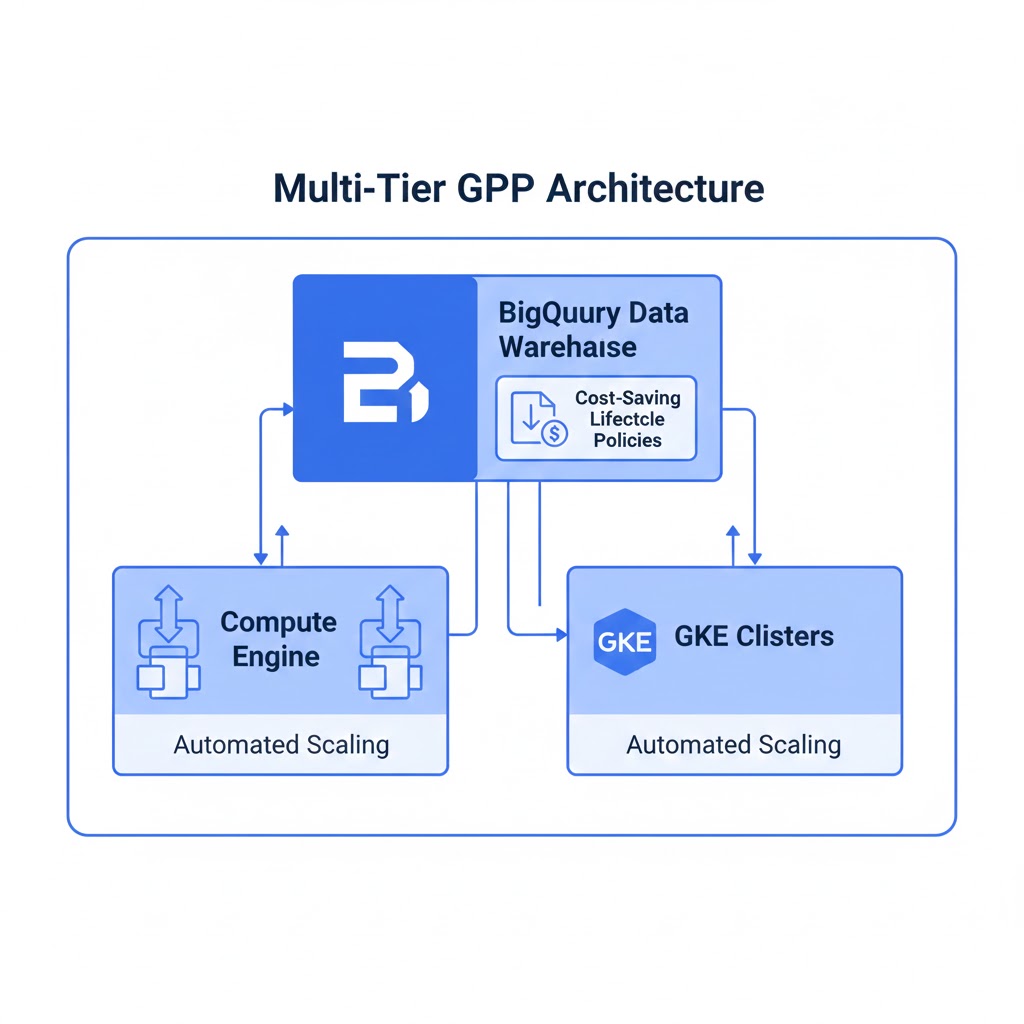
Managing modern cloud infrastructure requires more than just technical proficiency; it demands a strategic alignment between engineering velocity and fiscal responsibility. As organizations scale their digital footprint, the complexity of billing often leads to significant waste. Implementing effective GCP cost optimization techniques is no longer optional for enterprises looking to maintain a competitive edge. This comprehensive guide explores the architectural shifts and operational frameworks necessary to achieve a lean, secure, and high-performance Google Cloud environment.
Architectural Foundations of Cloud Financial Management
To truly master GCP cost optimization techniques, one must first understand the underlying architecture of Google’s global infrastructure. Unlike traditional data centers, the cloud operates on a shared responsibility model where cost is a first-class citizen of system design. A production-ready environment begins with a granular resource hierarchy. By utilizing Organizations, Folders, and Projects effectively, architects can enforce security perimeters while gaining precise visibility into spend.
The internal working of Google Cloud’s billing engine relies heavily on resource metadata. Implementing a mandatory labeling policy is the cornerstone of any FinOps strategy. These labels allow for the attribution of costs to specific business units, enabling a “showback” or “chargeback” model that drives accountability. When we look at the end-to-end cloud-native flow, every service from Compute Engine to BigQuery must be evaluated through the lens of unit economics. For instance, a well-architected GKE cluster utilizes horizontal pod autoscaling and vertical pod autoscaling to ensure that provisioned resources closely match real-time demand, preventing the “idle resource trap” that plagues many legacy migrations.
| Optimization Lever | Architectural Impact | Primary Benefit | Implementation Difficulty |
| Rightsizing | Compute & Memory tuning | Immediate 20-40% savings | Medium |
| CUDs / SUDs | Financial Commitment | 30-70% reduction | Low (Financial) |
| Spot VMs | Fault-tolerant workloads | Up to 91% savings | High (Engineering) |
| Lifecycle Policies | Storage Tiering | Reduced data footprint | Low |
Real-World Use Cases Across the Multi-Cloud Landscape
While the focus remains on Google Cloud, a Senior Architect must understand how GCP cost optimization techniques compare to strategies in AWS and Azure. In the enterprise sector, a multi-cloud approach is often used to mitigate vendor lock-in and optimize specific workloads.
In a recent deployment for a global retail giant, we moved their stateless batch processing from AWS Spot Instances to GCP Spot VMs. While AWS offers a 2-minute interruption notice, Google’s preemptible nature coupled with its per-second billing allowed the client to achieve a more granular cost-to-performance ratio for short-lived data transformations.
Meanwhile, an Azure-centric financial firm utilized the Azure Hybrid Benefit for their SQL Server workloads but found that GCP’s BigQuery offered a more scalable pay-per-query model for their massive data lake. By applying GCP cost optimization techniques like slot commitments and partition expiration, they reduced their monthly analytics spend by 35% compared to their legacy on-premises Hadoop environment. These examples highlight that cost, security, and scalability are deeply intertwined; a cheaper instance is useless if it compromises your compliance posture or fails to meet the SLA.
Tooling and Platform Comparison: Native vs. Third-Party
Navigating the ecosystem of optimization tools requires a deep dive into the strengths and weaknesses of each platform. Google’s native Cost Management tools, such as the Recommender and Billing Reports, provide an excellent starting point for most enterprises. They offer “out-of-the-box” insights into idle persistent disks and oversized virtual machines.
However, for complex, multi-layered architectures, third-party platforms like Kubecost or Ternary often provide deeper granularity for Kubernetes environments. While GCP’s native tools are exceptional for infrastructure-level visibility, Kubecost allows for cost allocation down to the namespace or individual pod level, which is critical for organizations running massive GKE fleets.
| Tool Name | Core Strength | Ideal Use Case | Strategic Weakness |
| GCP Recommender | Native Integration | Immediate low-hanging fruit | Limited cross-cloud view |
| Kubecost | Kubernetes Granularity | Container-heavy workloads | Setup complexity |
| BigQuery Billing Export | Custom Analytics | Enterprise-wide deep dives | Requires SQL expertise |
| Active Assist | AI-driven insights | Automated policy enforcement | Can be too aggressive |
Security, Compliance, and Financial Risks
A common mistake in the pursuit of GCP cost optimization techniques is neglecting the security and compliance implications of infrastructure changes. Reducing costs should never lead to an expanded attack surface. For example, moving workloads to different regions to take advantage of lower compute prices can inadvertently trigger data residency violations or increase egress costs if not properly architected.
Identity and Access Management (IAM) plays a crucial role here. FinOps practitioners must have “Billing Account User” or “Viewer” roles to analyze spend, but they should never have “Project Editor” permissions unless strictly necessary. Furthermore, cost spikes can sometimes be a leading indicator of a security breach. An unexpected surge in Compute Engine usage might not be a scaling success but rather a cryptojacking incident. Implementing automated budget alerts and anomaly detection via Pub/Sub ensures that your financial governance acts as a secondary security layer. Always ensure that your logging and encryption standards (CMEK/CSEK) remain intact during rightsizing exercises to satisfy SOC2, HIPAA, or GDPR requirements.

Best Practices and Production Recommendations
For an enterprise-ready environment, the following GCP cost optimization techniques represent the gold standard for production stability:
-
Continuous Rightsizing: Do not treat rightsizing as a one-time event. Use the Google Cloud Recommender API to automate the detection of underutilized N2 or E2 instances.
-
Commitment-Based Discounts: For baseline workloads that run 24/7, leverage Committed Use Discounts (CUDs). They offer a predictable price point for vCPU and RAM without requiring a change in machine type.
-
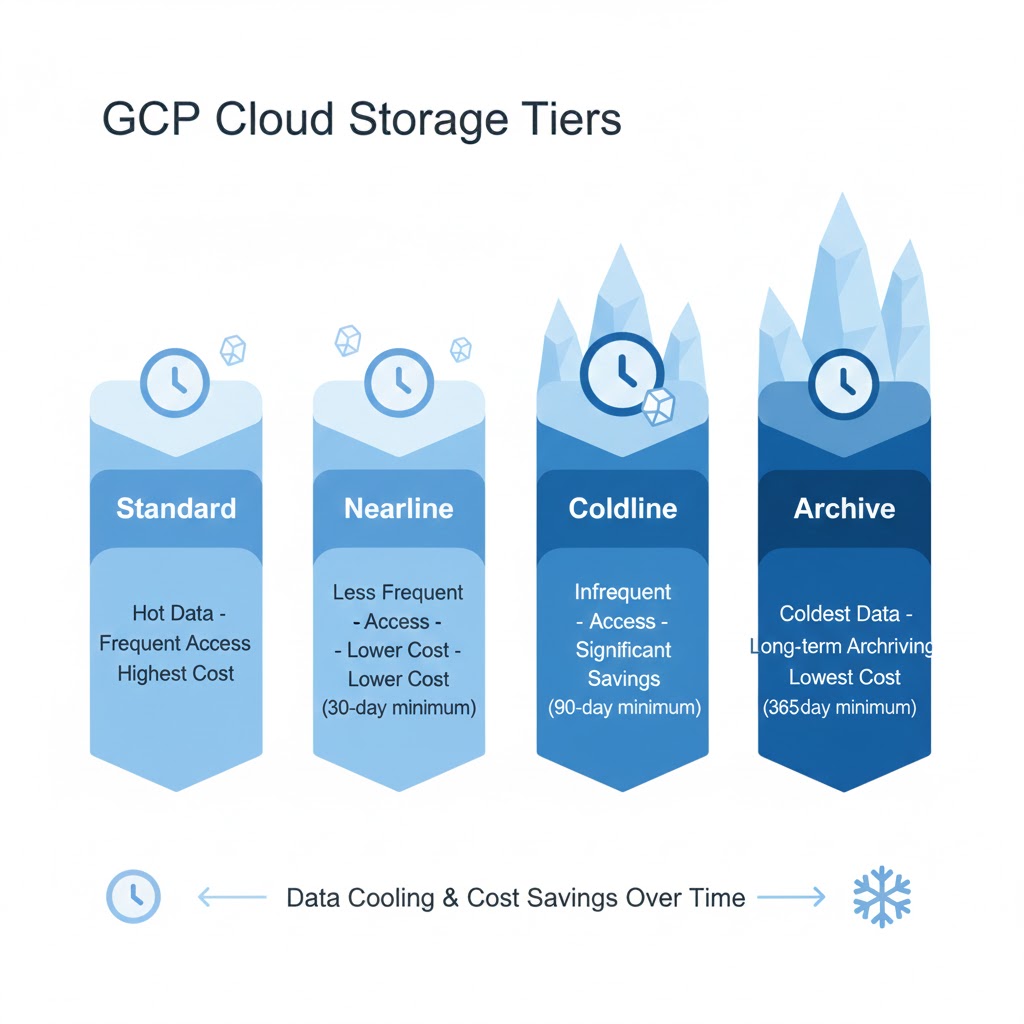
Advanced Storage Management: Implement Cloud Storage lifecycle policies to transition data from Standard to Nearline, Coldline, or Archive classes based on access patterns.
-
Network Egress Optimization: Minimize cross-region traffic. Use Cloud CDN to cache content closer to users and utilize VPC Service Controls to prevent unauthorized data exfiltration that could lead to massive egress bills.
-
Managed Service Adoption: Move from self-managed databases on GCE to Cloud SQL or Spanner. While the sticker price might look higher, the reduction in “Total Cost of Ownership” (TCO) through automated patching, backups, and scaling is significant.
| Strategy Phase | Focus Area | Actionable Metric | Success Criteria |
| Inform | Visibility | Tagging coverage % | 100% resource attribution |
| Optimize | Efficiency | Idle resource count | < 5% waste ratio |
| Operate | Governance | Budget alert accuracy | Zero over-budget projects |
Conclusion
Mastering GCP cost optimization techniques is a continuous journey of refinement. By integrating FinOps principles into your DevOps pipeline, you ensure that every architectural decision is backed by financial logic. From leveraging the power of Spot VMs for stateless processing to implementing strict IAM controls for billing visibility, the path to a lean cloud begins with data-driven insights. As you continue to scale, remember that the goal is not just to spend less, but to maximize the value of every dollar invested in the Google Cloud Platform. Start small with rightsizing, automate your lifecycle policies, and build a culture where cost is a shared responsibility across the entire engineering organization.
Google Cloud FinOps, cloud cost management, GKE cost reduction, GCP billing best practices, cloud rightsizing, Google Cloud architecture, enterprise cloud savings, GCP vs AWS cost, Cloud Storage lifecycle, FinOps strategy, GCP Spot VMs, Committed Use Discounts, cloud financial governance, GCP IAM security, cloud unit economics, BigQuery cost optimization, multi-cloud cost strategy, cloud waste reduction.
Links: