

History of Cloud Computing
Cloud computing has evolved over decades, transforming the way businesses and individuals store, process, and manage data. From the early days of mainframes to the era of distributed computing and the modern-day cloud, this revolutionary journey has reshaped IT infrastructure.
In this post, we’ll explore the history of cloud computing, its milestones, and its future, with an SEO-friendly format for readers and search engines alike.
The Origins of Cloud Computing
Client/Server Computing: The Foundation
Before cloud computing, client/server computing dominated IT infrastructure. In this model, servers acted as centralized hubs for software, data, and controls, while clients accessed these resources remotely.
While effective at the time, this approach lacked scalability and resource efficiency, laying the groundwork for a more robust solution: distributed computing.
The Evolution of Distributed Computing
As computer networks expanded, distributed computing emerged, enabling multiple computers to work together, share resources, and process tasks in parallel. This decentralized approach allowed for increased efficiency and scalability, paving the way for the cloud as we know it today.
Learn more about distributed computing.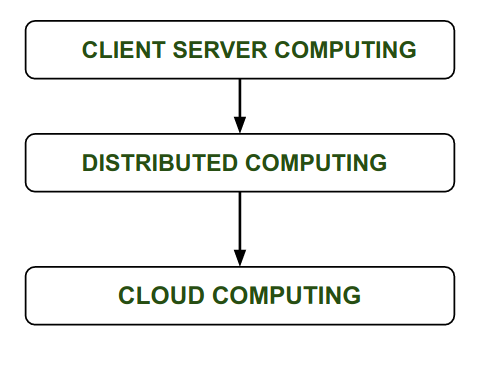
History of Cloud Computing: The Birth of the Cloud Concept
The modern idea of cloud computing began to take shape in the late 1990s and early 2000s, but the concept had been envisioned decades earlier. In 1961, computer scientist John McCarthy suggested that computing could become a utility, much like water or electricity. This visionary idea, however, lacked the technological foundation to become a reality at the time.
The Key Characteristics of Cloud Computing:
- On-demand access to resources
- Scalability and flexibility
- Cost-effective, pay-as-you-go models
- Remote accessibility through the internet
Read about cloud computing fundamentals.
Milestones in Cloud Computing History
Salesforce.com and the SaaS Revolution (1999)
The launch of Salesforce.com in 1999 marked a significant milestone in cloud computing. Salesforce offered Software as a Service (SaaS), allowing businesses to access software over the internet without on-premise installations.
This innovative model reduced infrastructure costs and simplified software deployment.
Learn how Salesforce transformed SaaS.
Amazon Web Services (AWS): The Game-Changer (2002-2006)
In 2002, Amazon introduced Amazon Web Services (AWS), offering basic cloud services. However, the true revolution came in 2006 with the launch of Elastic Compute Cloud (EC2). EC2 allowed users to rent virtual servers on demand, setting a new standard for scalability and cost-efficiency.
AWS remains a leader in the cloud computing space today, offering a wide range of services, including storage, machine learning, and analytics.
Google and Microsoft Enter the Cloud
- In 2009, Google Apps introduced cloud-based productivity tools, now known as Google Workspace, including Gmail, Docs, and Drive.
- Microsoft launched Windows Azure (now Microsoft Azure) in the same year, providing businesses with a comprehensive cloud platform.
Learn more about Google Workspace. Discover Microsoft Azure services.
Mainstream Adoption of Cloud Computing
As more businesses recognized the benefits of cloud computing, its adoption surged. Key drivers for this growth include:
- Scalability: Dynamic resource scaling for fluctuating workloads.
- Cost-Effectiveness: Reduced upfront investments with pay-as-you-go models.
- Collaboration: Enhanced productivity with cloud-based tools.
Industries Transformed by Cloud Computing
- Healthcare: Improved patient care through cloud-based data storage and telemedicine.
- E-commerce: Scalability for peak shopping seasons.
- Media & Entertainment: Seamless video streaming services.
Explore how industries benefit from cloud computing.
Future Trends in Cloud Computing
1. Edge Computing
Edge computing brings data processing closer to the source, reducing latency and enabling real-time insights. This is especially beneficial for IoT devices and applications requiring quick responses.
Read about edge computing advancements.
2. Serverless Computing
Serverless computing allows developers to focus on code rather than managing infrastructure. Popular platforms like AWS Lambda and Azure Functions are driving this trend.
Explore serverless computing on AWS.
3. Artificial Intelligence and Machine Learning
Cloud-based AI and ML services are transforming industries by enabling predictive analytics, automation, and advanced data processing.
4. Hybrid and Multi-Cloud Strategies
Many organizations are adopting hybrid and multi-cloud strategies to leverage the strengths of various providers while avoiding vendor lock-in.
Learn more about hybrid cloud solutions.
Challenges in Cloud Computing
While the cloud offers numerous advantages, there are challenges to address:
- Data Security: Protecting sensitive data from breaches.
- Compliance: Adhering to regulations like GDPR and HIPAA.
- Downtime: Mitigating disruptions caused by outages.
Read about overcoming cloud challenges.
Conclusion: The Ongoing Evolution of Cloud Computing
From its origins in client/server computing to its current status as a cornerstone of modern IT infrastructure, cloud computing continues to evolve. Pioneers like Salesforce, Amazon, Google, and Microsoft have propelled this technology into the mainstream, enabling businesses to achieve unprecedented levels of agility, scalability, and innovation.
As we look to the future, trends like edge computing, serverless architectures, and AI integration will further revolutionize the cloud landscape, driving growth and disruption across industries.
Contact us to learn how cloud computing can transform your business.