
Kubernetes Monitoring in 2025

A complete, step‑by‑step guide (Prometheus + Grafana, cost & security add‑ons)
| Rank | Tool / Platform | Type | Best For | Keywords Integration |
|---|---|---|---|---|
| 1 | Prometheus + Grafana | Open Source | Core metrics, dashboards, alerts | prometheus monitoring kubernetes, grafana kubernetes monitoring, kubernetes cluster monitoring with prometheus and grafana |
| 2 | Kubecost | Open Source | Cost allocation & efficiency | kubernetes cost monitoring, kubecost kubernetes cost monitoring and management |
| 3 | ELK / Elastic Stack | Open Source | Logs + observability | kubernetes logging and monitoring, elk kubernetes monitoring |
| 4 | Datadog | Commercial SaaS | Full-stack APM + infra + logs | datadog kubernetes monitoring, datadog monitor kubernetes pods |
| 5 | Dynatrace | Commercial SaaS | AI-powered monitoring & security | dynatrace kubernetes monitoring, dynatrace kubernetes application monitoring |
| 6 | New Relic | Commercial SaaS | APM, infra + Kubernetes metrics | new relic kubernetes monitoring, application monitoring kubernetes |
| 7 | Sysdig | Commercial / Open Core | Runtime security + metrics | sysdig kubernetes monitoring, kubernetes security monitoring |
| 8 | Zabbix / Nagios | Open Source | Traditional infra + K8s metrics | zabbix kubernetes monitoring, nagios kubernetes monitoring |
| 9 | Cilium Hubble / Pixie | Open Source (eBPF) | Network + service map visibility | ebpf kubernetes monitoring, kubernetes network traffic monitoring |
| 10 | Cloud-Native (AWS/GCP/Azure) | Managed | EKS, GKE, AKS cluster insights | aws kubernetes monitoring, google kubernetes engine monitoring, azure monitor kubernetes |
If you run production workloads on Kubernetes, you need observabilitymetrics, logs, traces, uptime checks, alerts, and sometimes cost and security signals. This post gives you a practical path to monitor Kubernetes clusters with Prometheus and Grafana, while touching on alternatives (Datadog, Dynatrace, New Relic, Zabbix, Nagios, Splunk, Elastic, Sysdig, Sumo Logic), cost monitoring with Kubecost, eBPF‑based visibility, and cloud‑native options on EKS/GKE/AKS. I’ll integrate common search phrases you asked for (e.g., how to monitor Kubernetes cluster with Prometheus and Grafana, Kubernetes monitoring best practices, Kubernetes network monitoring, Kubernetes security monitoring, etc.) naturally throughout.
What is Kubernetes monitoring?
Kubernetes monitoring is the continuous collection and analysis of cluster, node, and workload telemetry (metrics, logs, traces, events). It answers what to monitor in Kubernetes:
- Control plane: API server latency, request errors, etcd health, scheduler/ controller manager queues (kubernetes control plane monitoring).
- Nodes: CPU, memory, filesystem pressure, disk I/O, network (kubernetes node monitoring).
- Workloads: Pod restarts, liveness/readiness, CPU/memory/oomkills, request/limit saturation (kubernetes pod monitoring, kubernetes monitor pod cpu usage, kubernetes monitor pod memory usage).
- Networking: DNS, CNI health, kubernetes network traffic monitoring and pod network traffic monitoring.
- Storage: PV/PVC capacity, disk space, inode pressure (kubernetes persistent volume monitoring, kubernetes monitor pvc disk space).
- Security & compliance: audit events, image scanning, file integrity (kubernetes security monitoring, file integrity monitoring kubernetes).
- SLOs: latency, availability, error rates (application performance monitoring kubernetes).
- Cost: allocation/efficiency by namespace/workload/cloud asset (kubernetes cost monitoring, best platform for monitoring Kubernetes expenses).
Truth or myth: “Kubernetes supports inbuilt logging and monitoring mechanism (true or false)?”
It exposes metrics and events but does not provide a full monitoring stack. You compose one using tools such as Prometheus + Grafana (open source Kubernetes monitoring tools), or managed suites.
Landscape overview (open source & commercial)
- Open source Kubernetes monitoring tools: Prometheus, Alertmanager, Grafana, kube‑state‑metrics, node‑exporter, cAdvisor, Elastic/ELK (Elasticsearch, Logstash/Fluentd/Fluent Bit, Kibana), Wazuh (file integrity, security), Zabbix, Nagios, Netdata, Telegraf/InfluxDB, Percona Monitoring and Management, Falco (runtime security), Cilium + Hubble or Pixie for eBPF Kubernetes monitoring.
- Commercial: Datadog Kubernetes monitoring, Dynatrace Kubernetes monitoring, New Relic Kubernetes monitoring, AppDynamics, Splunk Kubernetes monitoring, SolarWinds, SignalFx/Observability, Checkmk, PRTG, Instana, Rancher monitoring.
- Cloud‑native:
- Amazon EKS: CloudWatch Container Insights (aws kubernetes monitoring).
- Google Kubernetes Engine: Cloud Monitoring (formerly Stackdriver Kubernetes Engine monitoring).
- Azure AKS: Azure Monitor for containers (azure kubernetes monitoring, azure monitor kubernetes).
For best Kubernetes monitoring tools 2025, most teams still standardize on Prometheus + Grafana for core metrics and Kubecost for cost analysis, adding a managed APM as needed.
Reference architecture (production‑ready)
A robust Kubernetes monitoring architecture often looks like:
- Prometheus Operator deploying kube‑prometheus‑stack (Prometheus, Alertmanager, Grafana, node‑exporter, kube‑state‑metrics, recording/alerting rules, kubernetes monitoring mixin dashboards).
- ServiceMonitor and PodMonitor CRDs discover scrape targets (that’s what is ServiceMonitor in Kubernetes).
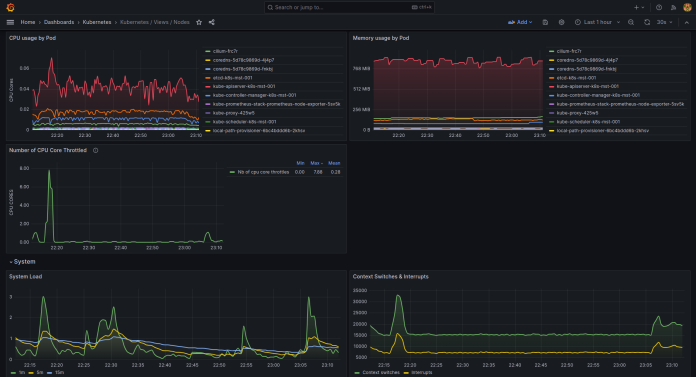
- Grafana dashboards for Kubernetes cluster monitoringprebuilt and custom (best Grafana dashboard for Kubernetes cluster monitoring).
- Alerting: Alertmanager routes to Slack, email, PagerDuty.
- Logs: Fluent Bit/Fluentd to Elasticsearch or Loki (kubernetes logging and monitoring, kubernetes monitoring with ELK).
- Tracing: OpenTelemetry collector exporting to Jaeger/Tempo/Datadog/New Relic.
- Multi‑cluster: Thanos/Mimir/Cortex for prometheus monitor multiple Kubernetes clusters and long‑term retention.
- Cost: Kubecost for kubernetes cost monitoring open source and kubecost kubernetes cost monitoring and management.
- Security: Falco, Wazuh, Snyk (kubernetes security monitoring tools), admission policies, and kubernetes audit logs monitoring.
- Network: Cilium Hubble or eBPF tools for kubernetes network monitoring.
Prerequisites
- A working cluster (EKS/GKE/AKS/bare‑metal/minikube/kind).
kubectlcontext pointing to the target cluster.- Helm 3 installed.
- Cluster has internet egress to pull images (or use a private registry mirror).
- Namespace strategy: we’ll use
monitoring.
Step‑by‑step: install kube‑prometheus‑stack (Prometheus + Grafana + Alertmanager)
This is the fastest path to “how to setup Prometheus monitoring on Kubernetes cluster”.
Step 1 Create namespace and add repo
kubectl create namespace monitoring
helm repo add prometheus-community https://prometheus-community.github.io/helm-charts
helm repo update
Step 2 Install the stack (baseline)
helm install kps prometheus-community/kube-prometheus-stack \
  --namespace monitoring
This deploys Prometheus, Alertmanager, Grafana, node‑exporter, kube‑state‑metrics, and the kubernetes monitoring grafana dashboards (the mixin).
Step 3 Expose Grafana
For quick testing:
kubectl -n monitoring port-forward svc/kps-grafana 3000:80
# open http://localhost:3000 (user: admin, pass from secret:)
kubectl -n monitoring get secret kps-grafana -o jsonpath="{.data.admin-password}" | base64 -d; echo
In production, use an Ingress with TLS. If you use Nginx, Contour, or Traefik, add an Ingress manifest and OAuth/SSO.
Step 4 Verify data sources and dashboards
Grafana ships with pre‑wired Prometheus datasource and kubernetes cluster monitoring dashboard. Import additional dashboards (node, etcd, API server, network IO, kubernetes pod monitoring Grafana dashboard, grafana kubernetes monitoring dashboard). This addresses monitoring Kubernetes cluster with Prometheus and Grafana.
Customizing the stack (values.yaml snippets)
Create values.yaml to harden/scale:
grafana:
  adminPassword: "ChangeMe!"
  ingress:
    enabled: true
    hosts: ["grafana.example.com"]
    annotations:
      kubernetes.io/ingress.class: nginx
    tls:
      - secretName: grafana-tls
        hosts: ["grafana.example.com"]

prometheus:
  prometheusSpec:
    retention: 15d
    replicas: 2         # HA pair
    walCompression: true
    resources:
      requests: { cpu: "500m", memory: "2Gi" }
      limits:   { cpu: "2",    memory: "8Gi" }
    additionalScrapeConfigs: []
    externalLabels:
      cluster: prod-use1
    serviceMonitorSelectorNilUsesHelmValues: false
    podMonitorSelectorNilUsesHelmValues: false

alertmanager:
  alertmanagerSpec:
    replicas: 2
Install/upgrade:
helm upgrade --install kps prometheus-community/kube-prometheus-stack \
  -n monitoring -f values.yaml
Scraping your apps with ServiceMonitor / PodMonitor
To configure Prometheus to monitor Kubernetes workloads you own, expose /metrics and label your Service so a ServiceMonitor can match it.
Example app Service & metrics endpoint
apiVersion: v1
kind: Service
metadata:
  name: api
  namespace: shop
  labels:
    app: api
spec:
  selector:
    app: api
  ports:
    - name: http
      port: 80
      targetPort: 8080
---
apiVersion: monitoring.coreos.com/v1
kind: ServiceMonitor
metadata:
  name: api
  namespace: monitoring
  labels:
    release: kps    # must match Helm release label
spec:
  selector:
    matchLabels:
      app: api
  namespaceSelector:
    matchNames: ["shop"]
  endpoints:
    - port: http
      interval: 15s
      scheme: http
For sidecar exporters or cases without a Service, use PodMonitor. This satisfies kubernetes service monitor prometheus, service monitor prometheus kubernetes, and kubernetes monitoring coreos com v1 CRDs.
Node, cluster & job metrics (beyond the basics)
- kube‑state‑metrics covers Deployments, DaemonSets, HPA status, PVC capacitygreat for kubernetes resource monitoring and kubernetes metrics to monitor (e.g., desired vs ready replicas, pod restart counts).
- node‑exporter exposes OS metrics (CPU steal, IO wait) for kubernetes monitor disk usage and kubernetes monitor memory usage.
- blackbox‑exporter for HTTP/TCP/ICMP uptime monitoring (kubernetes uptime monitoring).
- jmx_exporter and dotnet monitor kubernetes/jvm monitoring in Kubernetes for app runtimes.
- kube‑state‑metrics + PromQL: detect kubernetes monitoring pod restarts, kubernetes monitor deployment rollouts, kubernetes monitor resource usage.
Common PromQL you’ll actually use
- Pod CPU (cores)
sum by (namespace, pod) (rate(container_cpu_usage_seconds_total{image!=""}[5m])) - Pod memory (bytes)
sum by (namespace, pod) (container_memory_working_set_bytes{image!=""}) - Node filesystem usage (%)
100 * (1 - node_filesystem_free_bytes{fstype!~"tmpfs|overlay"} / node_filesystem_size_bytes{fstype!~"tmpfs|overlay"}) - API server 99th latency
histogram_quantile(0.99, sum by (le) (rate(apiserver_request_duration_seconds_bucket[5m])))
These power dashboards for kubernetes performance monitoring, kubernetes cluster monitoring dashboard, and targeted alerts.
Alerts that matter (Alertmanager)
Start with the kubernetes mixin rules and add your own:
groups:
- name: k8s.custom.rules
  rules:
  - alert: PodCrashLooping
    expr: increase(kube_pod_container_status_restarts_total[10m]) > 3
    for: 10m
    labels: { severity: critical }
    annotations:
      summary: "Pod {{ $labels.pod }} is crash looping"
      description: "Container {{ $labels.container }} restarted >3 times in 10m"
Route via Slack/email/PagerDuty; add silences for noisy deployments.
Logging, traces & events (full stack)
- ELK / Elastic: Fluent Bit → Elasticsearch → Kibana for kubernetes log monitoring and kubernetes logging and monitoring tools.
- Loki pairs well with Grafana (“logs‑with‑labels”).
- OpenTelemetry for tracing (export to Jaeger/Tempo/Datadog/New Relic).
- Kubernetes events monitoring: eventrouter or scrape API server events; helpful for kubernetes job monitoring and deploy failures.
Network & eBPF visibility
- Cilium + Hubble or Pixie provide ebpf kubernetes monitoring, traffic flows, policy drops (kubernetes pod network traffic monitoring, kubernetes traffic flow monitoring).
- For kubernetes monitor network traffic without changing CNI, use host‑level exporters or eBPF agents.
Cost monitoring with Kubecost
Install the Kubecost Helm chart to get kubernetes cost monitoring open sourceallocation by namespace/deployment, idle cost, right‑sizing, and effectively managing Kubernetes resources with cost monitoring. This helps pick the best platform for monitoring Kubernetes expenses and answer is it best platform…? questions with data. Kubecost integrates with Prometheus and cloud billing.
Security monitoring (Falco, Wazuh, Snyk, Sysdig)
- Falco detects suspicious syscalls (crypto‑miners, container escapes) part of kubernetes security monitoring.
- Wazuh provides file integrity monitoring Kubernetes and SIEM integration (also wazuh kubernetes monitoring).
- Sysdig, Snyk, Aqua add runtime & image scanning; GuardDuty for EKS ties into kubernetes audit logs monitoring.
- Certificate expiry monitoring: exporters or custom Jobs check TLS/certs (kubernetes certificate expiry monitoring).
Multi‑cluster & long‑term storage
- Use Thanos/Mimir/Cortex for centralized queries and durable object‑store retention, enabling kubernetes multi cluster monitoring using Prometheus and Grafana.
- Label metrics with
cluster=<name>for cross‑cluster dashboards and best‑rated Kubernetes monitoring solutions for multi‑cluster setups.
Managed/hosted options (when not using DIY)
- Datadog monitoring Kubernetes (Autodiscovery, live containers, APM, datadog monitor kubernetes pods/nodes; supports deploy Datadog agent to monitor Kafka Kubernetes using Terraform, multi‑cluster).
- Dynatrace monitoring Kubernetes (one‑agent, Davis AI; supports dynatrace how to monitor self signed certificate in Kubernetes and EKS/GKE/AKS).
- New Relic Kubernetes monitoring guide, AppDynamics Kubernetes monitoring, Elastic Kubernetes monitoring, Splunk Kubernetes monitoring, SolarWinds Kubernetes monitoring, Checkmk Kubernetes monitoring, PRTG Kubernetes monitoring, Netdata monitoring Kubernetesall have cluster agents.
- Cloud provider suites:
- EKS: CloudWatch Container Insights and Managed Prometheus/AMP (amazon elastic kubernetes service monitoring).
- GKE: Google Cloud Monitoring for Kubernetes (the evolution of stackdriver kubernetes engine monitoring).
- AKS: Azure Monitor for containers + Azure Managed Grafana, Azure Kubernetes Service monitoring.
These are great if you want less Ops burden than running Prometheus yourself.
Best practices (2025)
- Request/limit hygiene: Alert on CPU throttling and memory RSS vs. limits (requests and limits monitoring Kubernetes).
- Right dashboards: Pin a kubernetes monitoring dashboard Grafana for cluster SREs, and simple service dashboards for app teams.
- HA & scalability: Two Prometheus replicas, PDBs, persistent volume sizing; offload long‑term storage to Thanos. Scrape intervals: 15s for infra, 5–10s for hot paths.
- RBAC & network: Read‑only ServiceAccounts; limit Prometheus’ permissions and kubernetes service monitor endpoint exposure; TLS for all ingresses.
- SLOs over noise: alert on user‑visible SLOs not just CPU spikes.
- Logs + metrics + traces together: e.g., Grafana “Explore” links from Prometheus → Loki → Tempo.
- Security: Enable kubernetes audit log monitoring, integrity checks, image scanning; alert on privilege escalation; kubernetes monitor pod security.
- Backpressure: Watch API server 429s, kubelet cadvisor timeouts, queue lengths; kubernetes etcd monitoring compaction.
Troubleshooting quick wins
- No metrics for a workload? Check labels and
ServiceMonitorselectors; many issues are mismatchedrelease: kpslabels. - High cardinality? Avoid unbounded labels (request path, pod UID). Use relabeling and
droponadditionalScrapeConfigs. - Prometheus OOM? Increase memory, enable
walCompression, tune scrape interval, use recording rules to pre‑aggregate. - Grafana empty panels? Fix time range, datasource, namespace filters.
- Node filesystem alerts? Confirm ephemeral storage usage (emptyDir, container logs). This is the classic kubernetes monitor disk usage trap.
Example: monitor a Spring Boot service on Kubernetes
Expose Micrometer/Prometheus endpoint and scrape itfulfilling prometheus to monitor spring boot services on Kubernetes.
application.yml
management:
  endpoints:
    web:
      exposure:
        include: "health,info,prometheus"
  metrics:
    tags:
      application: order-service
K8s ServiceMonitor as shown earlier; build Grafana panels for HTTP latency, error rate, RPS. This is application monitoring Kubernetes done right.
Example: monitor Kafka inside the cluster
- Deploy kafka‑exporter or JMX exporter sidecars.
- Use ServiceMonitor with scrape on
:9308/JMX HTTP port. - Add dashboards for consumer lag; alert when lag increasesuseful with deploy Datadog agent to monitor Kafka Kubernetes using Terraform too.
Beyond metrics: logging & ELK
To do kubernetes monitoring and logging with ELK:
- DaemonSet Fluent Bit reads container logs from
/var/log/containers. - Enrich with
kubernetesmetadata filter (namespace, pod, container). - Send to Elasticsearch; visualize with Kibana dashboards (kubernetes logging monitoring tools).
- Add Wazuh for security analytics and file integrity monitoring Kubernetes.
Frequently asked questions (keyword‑rich, straight answers)
- How do I monitor Kubernetes?
The most common path is Prometheus + Grafana via kube‑prometheus‑stack. Add ServiceMonitor/PodMonitor for workloads, Alertmanager for paging, and tailor dashboards. This covers how to monitor Kubernetes cluster, monitoring Kubernetes with Prometheus and Grafana, and prometheus monitoring Kubernetes tutorial. - What is the monitoring tool in Kubernetes?
Kubernetes itself isn’t a monitoring tool. The de‑facto open source choice is Prometheus (with Grafana). Managed alternatives include Datadog, Dynatrace, New Relic. - Does Kubernetes have monitoring?
It exposes endpoints and events; you bring a stack (so does Kubernetes provide monitoring? → No, not end‑to‑end). - How to monitor Kubernetes nodes/pods?
Use node‑exporter/cAdvisor/kube‑state‑metrics + PromQL and dashboards. For pods, chart CPU/memory (RSS), restarts, and readinessanswering how to monitor Kubernetes pods with Prometheus. - How do I monitor network traffic?
eBPF with Cilium Hubble or Pixie, or exporters; this addresses kubernetes network traffic monitoring and monitor Kubernetes with Grafana. - Best open source monitoring tools for Kubernetes?
Prometheus, Grafana, Alertmanager, kube‑state‑metrics, node‑exporter, Loki/ELK, Falco, Kubecost. - Best way to monitor Kubernetes cluster?
Deploy kube‑prometheus‑stack, wire ServiceMonitor, import kubernetes monitoring Grafana dashboards, add Alertmanager, expand to logs/traces/cost.
End‑to‑end recipe (copy/paste checklist)
- Install basics
kubectl create ns monitoring helm repo add prometheus-community https://prometheus-community.github.io/helm-charts helm repo update helm install kps prometheus-community/kube-prometheus-stack -n monitoring - Secure Grafana: Ingress + TLS + SSO; rotate admin password.
- Import dashboards: cluster, nodes, workloads, network, storage.
- Add app metrics: expose
/metrics, create ServiceMonitor. - Alerts: enable mixin alerts; add custom rules for SLOs and cost anomalies.
- Logs: add Fluent Bit → Elasticsearch/Loki; wire Log panel links in Grafana.
- Traces: deploy OpenTelemetry collector; send to Jaeger/Tempo/APM.
- Network eBPF: Cilium Hubble or Pixie for kubernetes network monitoring.
- Cost:
helm install kubecost …for kubecost open source cost monitoring Kubernetes. - Multi‑cluster: deploy Thanos/Mimir and label metrics.
- Hygiene: RBAC least privilege, scrape interval tuning, retention offload, quota dashboards, kubernetes monitoring best practices.
When to consider other tools
- Need turnkey APM + logs + RUM + infra with one bill? Choose Datadog Kubernetes monitoring, Dynatrace Kubernetes monitoring, or New Relic Kubernetes monitoring.
- Already on Elastic? Use the Elastic Agent for elastic Kubernetes monitoring with kibana and metricbeat/filebeat.
- Legacy NMS? Zabbix monitoring Kubernetes, Nagios Kubernetes monitoring, or PRTG can ingest exporter metrics.
- Deep runtime/security? Sysdig Kubernetes monitoring, Falco, Snyk.
- Cloud‑native? Google Cloud Monitoring, Azure Monitor Kubernetes, or AWS Container Insights.
Final notes for 2025
- Prefer eBPF for low‑overhead Kubernetes monitoring tools (network, syscall, DNS).
- Aim for SLO‑driven alerts and automated root‑cause analysis (Grafana, Dynatrace, or Datadog provide “top Kubernetes monitoring tools with automated root cause analysis” features).
- Keep cost visible (Kubecost), and security in scope (Falco/Wazuh).
- Document runbooks next to dashboards so on‑call can act.
Official references (helpful starting points)
- Kubernetes Docs Monitoring, Logging & Debugging
- Prometheus Operator / kube‑prometheus‑stack Helm chart
- Grafana dashboard library for Kubernetes / Prometheus
Bonus: quick snippets you’ll likely need
ServiceMonitor for multiple namespaces
apiVersion: monitoring.coreos.com/v1
kind: ServiceMonitor
metadata:
  name: web
  namespace: monitoring
  labels: { release: kps }
spec:
  selector:
    matchLabels: { app: web }
  namespaceSelector:
    any: true
  endpoints:
    - port: http
      interval: 30s
Alertmanager receiver (Slack)
route:
  receiver: "slack"
receivers:
- name: "slack"
  slack_configs:
  - channel: "#alerts"
    send_resolved: true
    api_url: "<slack-webhook-url>"
Thanos sidecar for Prometheus (for multi‑cluster/long retention)
prometheus:
  prometheusSpec:
    thanos:
      image: quay.io/thanos/thanos:v0.36.0
      objectStorageConfig:
        existingSecret:
          name: thanos-objstore
          key: objstore.yml